
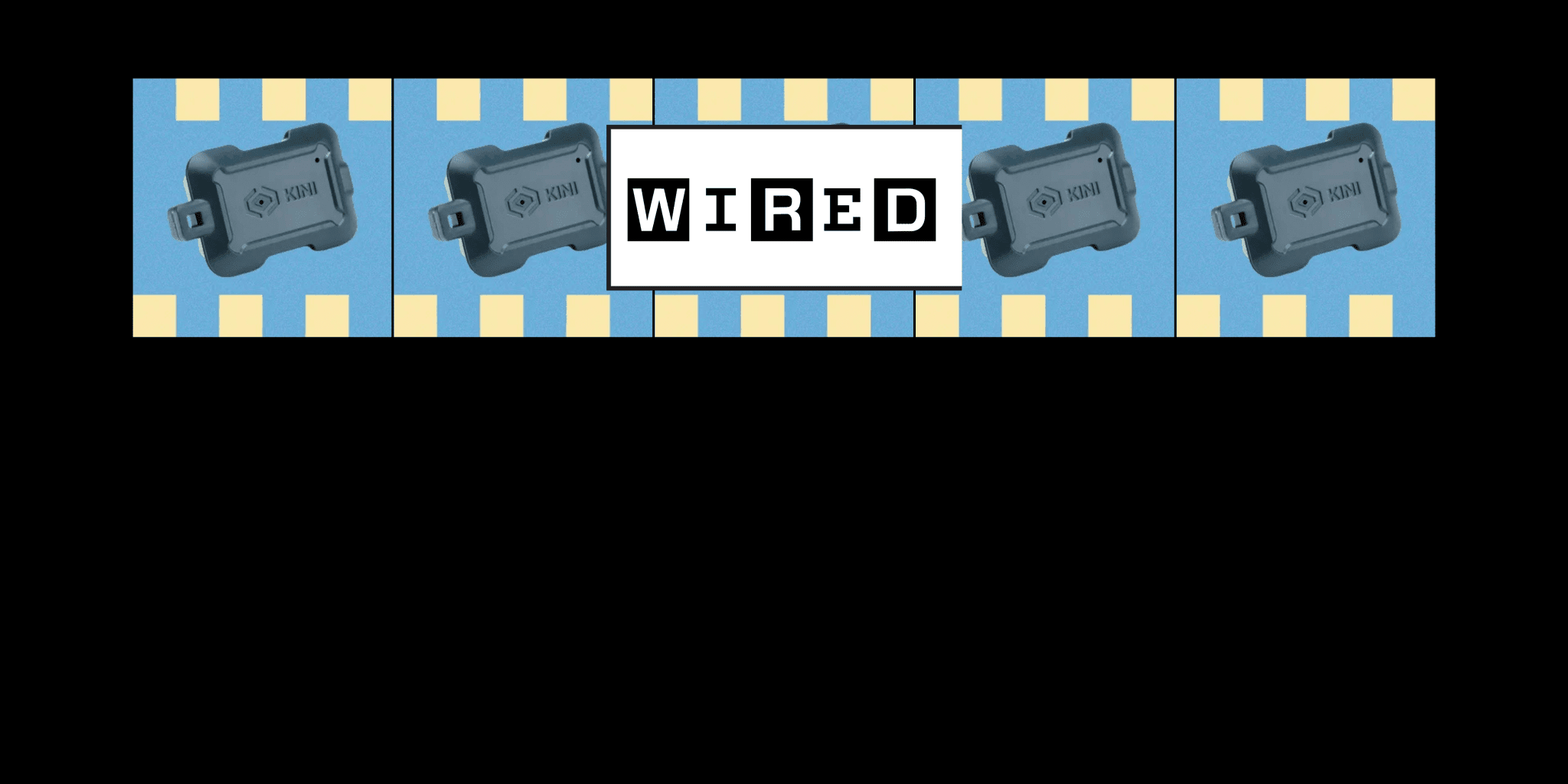
WIRED just featured Kini in a roundup of the best privacy-first home security gear, and called it "highly configurable," "very reliable," and "a versatile monitoring device."
Kini is built on years of our hard work and attention to detail. We set out to create a device to give parents a heads-up that kids were getting into things that were off limits to them. We wanted a product that was small, easy to use, required no maintenance, and above all, didn't keep asking the owners for more money. We built Kini using quality components. The battery on Kini was pressure tested (airplane altitude and below sea level), tested under heat and under freezing, short circuited and overcharged. Once we had a battery we liked, we didn't stop there. We watched the circuit board under an infrared heat imager and identified components that were wasting electricity as heat, and redesigned with another chip. That's how Kini only needs to be charged once every 12 to 18 months. So you won't be caught going back and forth to your "hidden spot" just to charge it.
Kini also periodically checks the battery and itself, and will send you an alert if it can't connect to Wi-Fi or needs to be recharged, so you can always rest assured it's continuing to work for you silently in the background.
Kini can send you an SMS text in about 5 to 8 seconds. Again, we weren't happy with that, so we now support app push notifications, which get the message to you in 3 to 5 seconds instead.
We sent Simon a Kini months ago and then did what every small company does after that: waited. No follow-up calls, no check-ins, no relationship to lean on. He tested it on his own time and wrote what he found. That's what makes his comments, "highly configurable," "very reliable," and "a versatile monitoring device," mean something.
He tested it in a drawer and a cabinet. It caught every open or close, every time.
He also noted our no-data-collection policy, the option to turn logging off completely, Stasis mode, and our IFTTT and webhook support.
We built Kini for several reasons. As parents, we knew there are certain things kids shouldn't get into unsupervised, and some of those things can be dangerous. We wanted to know the moment that access happened, not find out after the fact. And we believed you shouldn't need a camera pointed at your own home to get that peace of mind.
Read the full piece on Wired here, in their roundup of the best motion sensors and home security gadgets without cameras.
Want to see what the fuss is about? Shop Kini SafeAlert
Share:
No Cameras. No Tracking. No Data. Here's How.
We're crossing that bridge... A note from Kini inventor, Mike Zabetian